 Mookmik
Why drawing is so good for 3- to 5-year-olds
Scribbles are serious work. Here is what young children practise every time they pick up a crayon, and easy ways to keep them drawing.
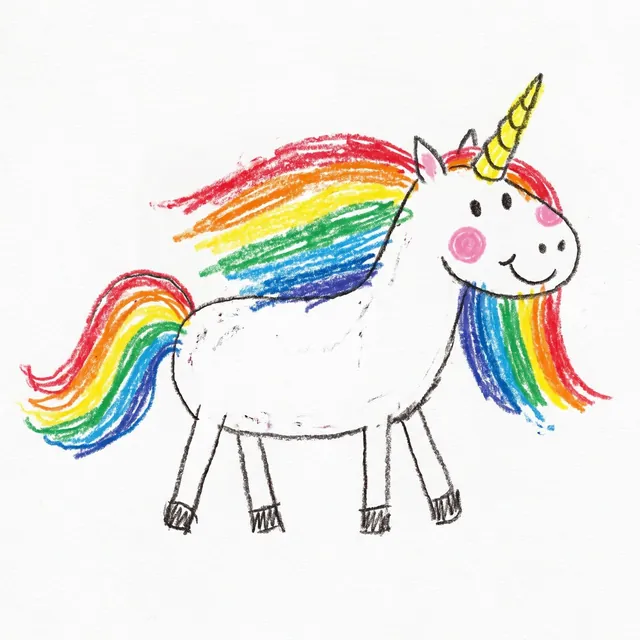
To a grown-up, a page of purple loops might look like, well, a page of purple loops. To a three-year-old it might be a dragon, a storm and their grandma, all at once. Drawing is one of the first ways young children put their ideas into the world, and it does a lot more than fill a rainy afternoon.
What children practise when they draw
Strong, careful hands
Gripping a crayon, pressing hard or soft, making a line go where they want it to: all of this builds the small-muscle control children later use to write, cut, button and tie. Thick crayons and chunky markers are easiest for small hands.
Planning and problem-solving
What should I draw? Where does the head go? There's no room for the tail! Even a simple drawing is a string of small decisions, and children get better at them with practice.
Words and stories
Ask a preschooler about their drawing and you'll often get a story much bigger than the picture. Talking about drawings is a natural way to build vocabulary and storytelling: "This is the dog. He's sad because of the rain."
Feelings
Young children have big feelings and not many words for them yet. A drawing can be a way to show something they can't quite say: a scary dream, a new baby, a happy day at the beach.
Focus and pride
Finishing a drawing, however quick, means finishing something they chose to do. Showing it to someone who's genuinely interested is a real confidence boost.
What drawing looks like at this age
Every child moves at their own pace, but many follow a similar path:
- Scribbles (around 2 to 3): lines, loops and dots, often just for the joy of moving the crayon.
- Shapes (around 3 to 4): circles, lines and crosses appear, and children start naming what they've drawn, sometimes only after drawing it.
- First people (around 3 to 5): the famous "tadpole" person, a big round head with arms and legs coming straight out of it.
- Little scenes (around 4 to 6): a strip of sky at the top, the ground at the bottom, and things in between.
Purple dogs and floating houses aren't mistakes. They're part of the process.
How to keep them drawing
- Keep supplies within reach. A box of crayons and a stack of paper on a low shelf invites drawing without asking. Here's how to set up a drawing corner in 10 minutes.
- Draw alongside them. You don't need to be good at it. Children love company far more than skill. Try these drawing games to play together.
- Talk about the drawing, not the talent. "Tell me about it" works better than "What is it?" More ideas in "I can't draw!".
- Give drawings a job. A card for a grandparent, a sign for the bedroom door, a menu for a pretend café.
- Put them on display. A string and a few clothes pegs turn any wall into a gallery.
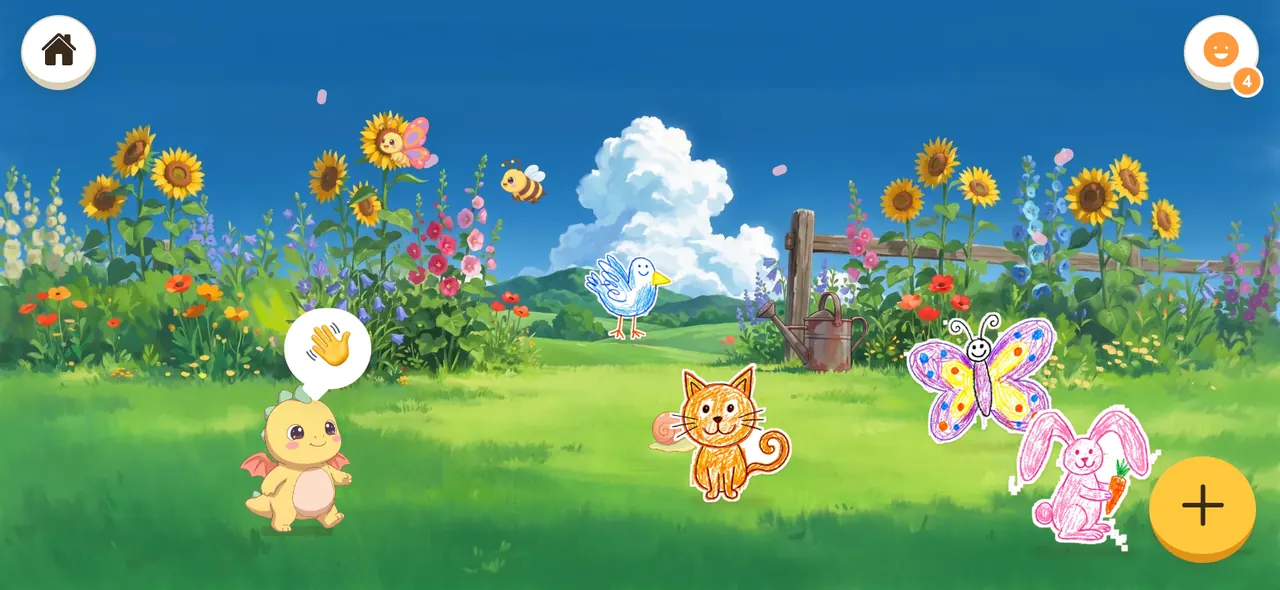
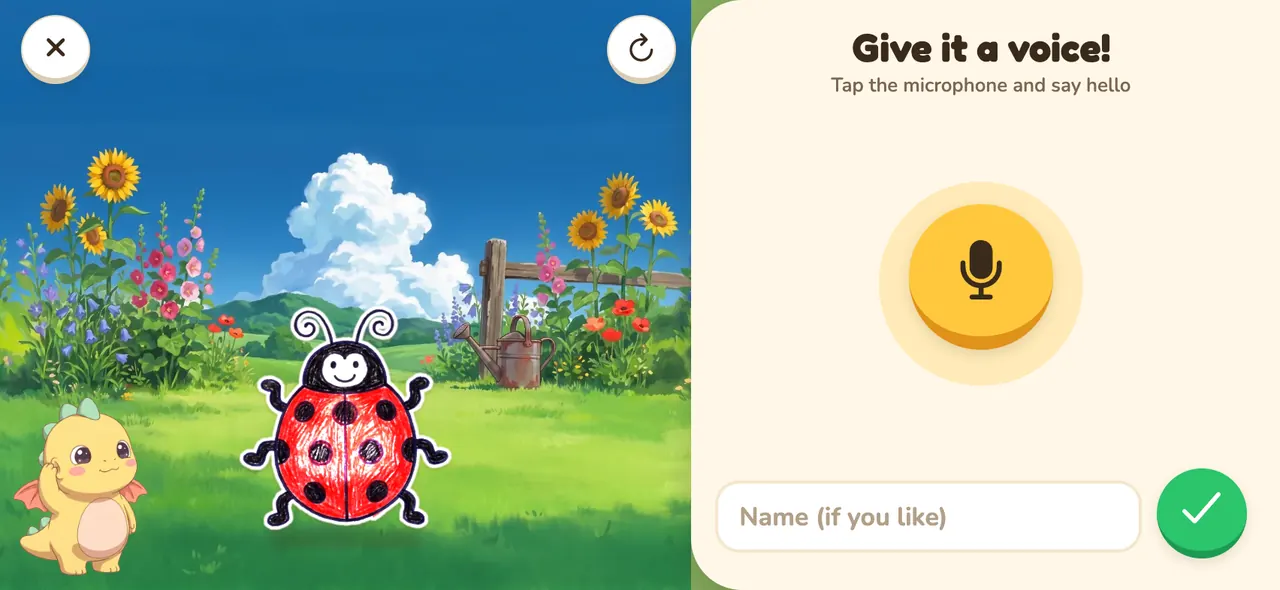
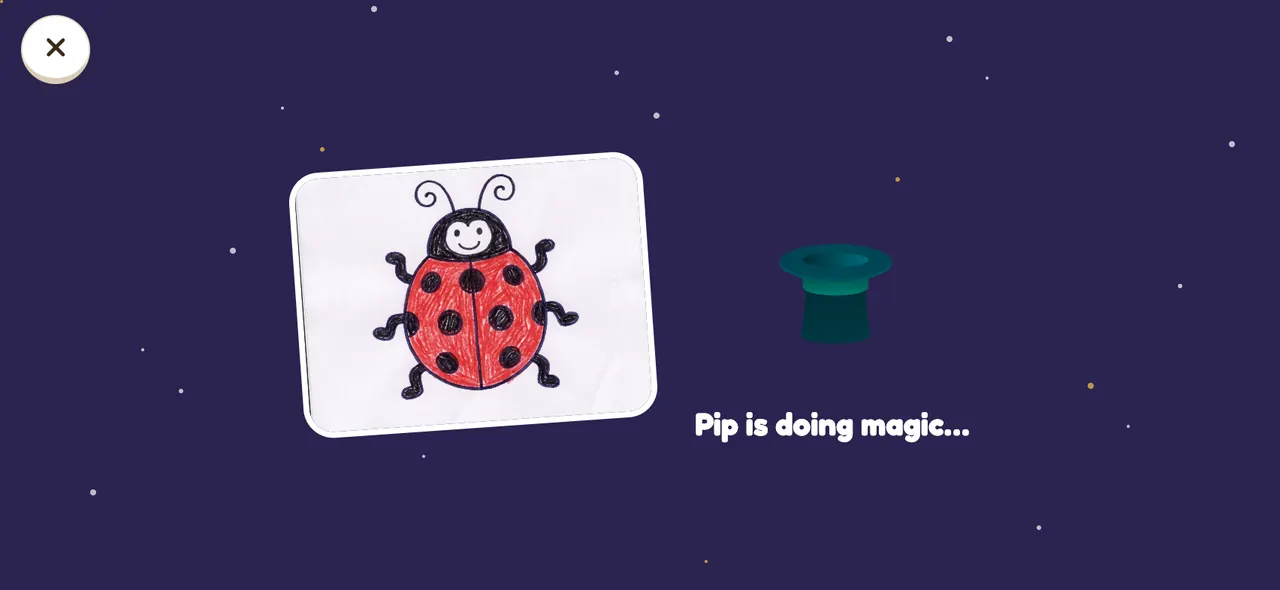
Mookmik World gives drawings one more job: becoming a friend that walks, talks and plays in a painted world. A small reward on a screen for a lot of good work on paper.

 Mookmik World