 Mookmik
Skills for the future start with a crayon
Creativity, focus, storytelling and the courage to try again: the skills our children will need most are practised every day at the drawing table.
Nobody knows exactly what jobs today's preschoolers will do one day. Many of them probably don't exist yet. But we do know which skills keep coming up when researchers and employers look ahead, and it's striking how many of them get practised at a kitchen table with a sheet of paper.
What the world is asking for
In its Future of Jobs Report 2025, the World Economic Forum asked employers around the world which skills will matter. Alongside technology skills, they expect creative thinking, resilience, flexibility and agility, and curiosity and lifelong learning to keep rising in importance up to 2030.
Education is paying attention too. In 2022, the OECD's PISA study, the large international assessment of 15-year-olds, tested creative thinking for the first time, in 64 countries and economies. One of the four areas it looked at was visual expression.
Creative thinking isn't a talent that some children have and others don't. It's a habit: coming up with ideas, trying them out and making them better. For a three-year-old, the best place to practise it is usually a blank sheet of paper.
Seven future skills hiding in a drawing
1. Creative thinking
A blank page comes with no instructions. Deciding what to draw, and inventing things that don't exist ("a giraffe with wheels!"), is creative thinking in its simplest form.
2. Problem-solving
No room left for the tail? Run out of blue for the sky? Drawing is full of small problems, and children solve them on their own, many times an hour.
3. Focus
Staying with one drawing until it's finished trains attention: a quiet counterweight to apps designed to grab it. Our calm drawing games help too.
4. Storytelling and language
Say "Tell me about it", and a drawing becomes a story, with characters, places and a plot. That's early literacy in action.
5. Resilience
Drawings go wrong. Crayons break. Learning to say "I'll make it a cloud instead" and carry on is resilience, practised on a small scale. If your child gets stuck, here's what to say when they say "I can't draw".
6. Fine motor control
Gripping, pressing and steering a crayon builds the hand strength and control children later need for writing. There's more on this in why drawing is so good for 3- to 5-year-olds.
7. Self-expression
A drawing can show what a child can't yet say: a worry, a wish, a happy memory. Knowing how to put what's inside into the world is a skill for life.
Why paper, not only a screen?
Drawing apps can be fun, but paper has things a screen can't copy: the resistance of a real crayon, colours that smudge and mix, mistakes you can't undo, and a finished drawing you can hold, give away or hang on the wall. And paper doesn't ping, autoplay or suggest what to do next. The ideas have to come from the child.
No lessons or special materials needed. Paper and crayons always within reach, a grown-up who's interested, and a few minutes on most days are enough to build the habit. Drawing together counts double: try our drawing games for parents and kids.
Where Mookmik fits
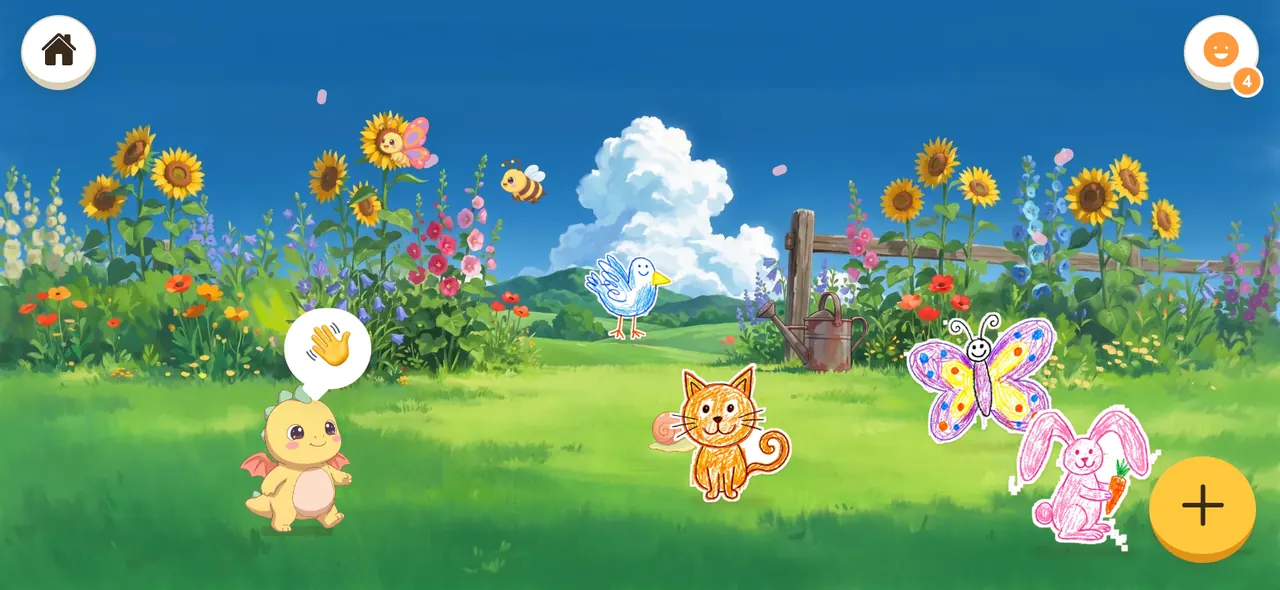
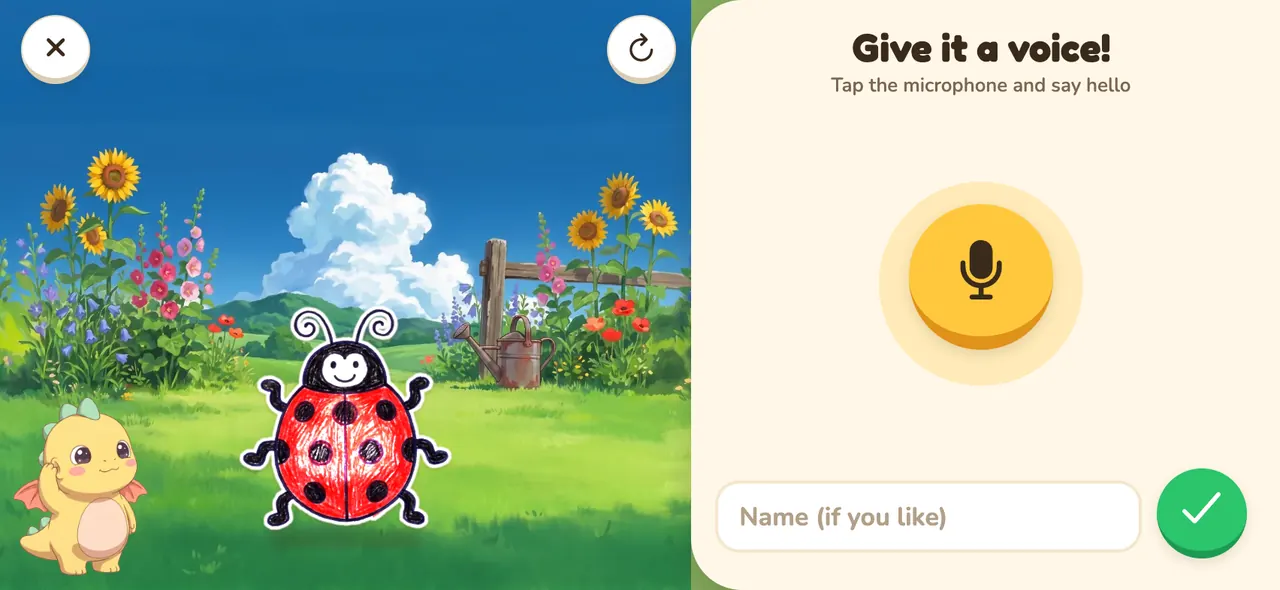
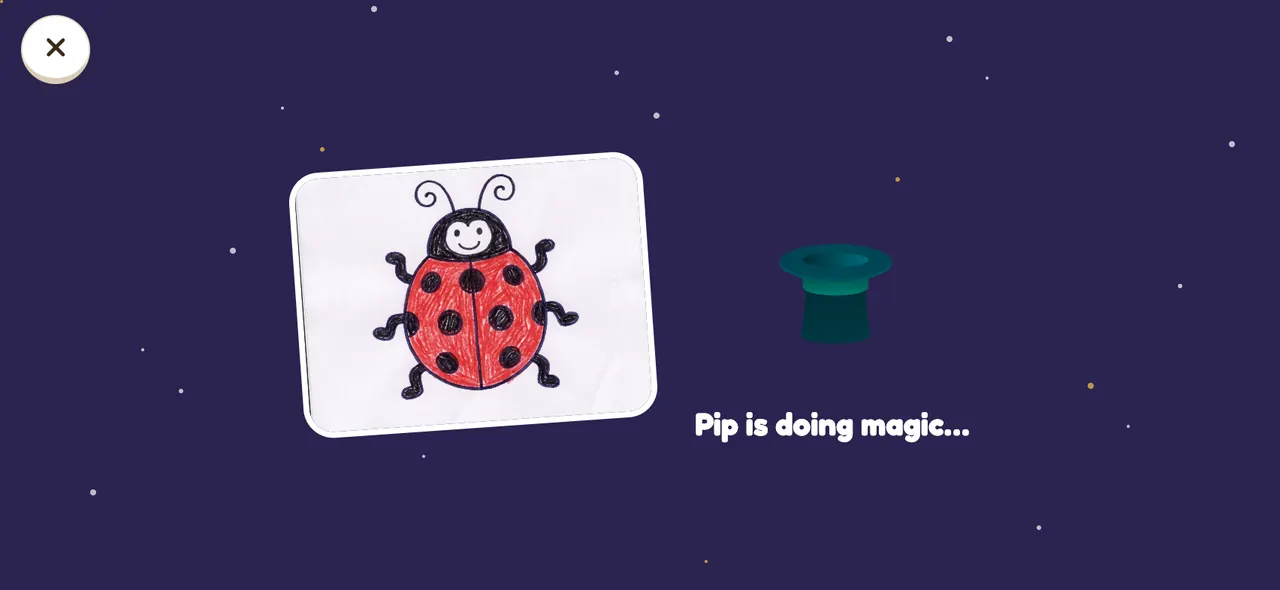
Mookmik World uses the screen as a reward for work done on paper. Every friend in the app starts as your child's own drawing: they invent it, draw it, name it and give it a voice, and Pip brings it to life. Want another friend? That means another idea, and another drawing.
Sources
- World Economic Forum (2025): The Future of Jobs Report 2025
- OECD (2024): Students in high-performing education systems record top scores in new international creative thinking assessment
 Mookmik World